
AI enabled ERP extends the system you already have so it becomes more helpful in daily work. With machine learning, natural language assistance and automation inside familiar workflows, teams can reduce repetitive effort, see patterns earlier and take action sooner. The focus is practical and controlled so people remain at the centre while the system provides better support.
Organisations invest heavily in ERP to standardise processes and create a single source of truth. Many still face bottlenecks that slow decisions and consume time. Common issues include manual keying from documents, late discovery of exceptions, inconsistent approval paths and a backlog of customer enquiries. AI inside ERP addresses these challenges in a measured way. It extracts structured data from unstructured inputs, flags anomalies, routes cases to the right team with helpful context and learns from patterns so recommendations become more relevant over time. The outcome is less friction and faster flow of information across the business.
Some common issues AI helps solve include:
- Manual handling in finance, procurement and operations such as approvals, reconciliations and document capture
- Low confidence in plans that leads to over stocking, under stocking and cash surprises
- Customer expectations that outpace legacy service workflows and response times
- Fragmented data across systems that delays visibility and slows decisions
Let us help you implement a AI enabled ERP system
Finance, Supply Chain and Customer Experience AI Capabilities
Common areas where AI delivers immediate value include:
- Finance AI improves forecasting accuracy, highlights anomalies and reduces manual financial effort
- Supply chain AI senses demand shifts early and strengthens planning and supplier risk insight
- Workflow automation moves routine tasks efficiently so teams focus on higher value decisions
- Customer experience AI reduces wait times through smart routing, chat and proactive assistance
- Combined AI capabilities make ERP systems more responsive, reliable and supportive for daily operations.
AI enabled capability within ERP systems gives teams earlier insight, reduced effort and clearer decision support across finance, supply chain and customer operations. Finance teams often benefit first because they have well structured historical data and defined processes. AI can support invoice capture, highlight anomalies, predict cash flow and assist with rolling forecasts, giving leaders more context to make timely choices. In supply chain functions, AI provides value by sensing demand changes earlier, identifying supplier risk and improving how warehouses and delivery routes are planned. These capabilities help teams respond to variability with greater confidence. In customer experience and workflow areas, AI powered chat, routing and knowledge suggestions reduce handling time and ensure that customers receive more relevant support. This helps staff focus on service rather than repetitive tasks. Together, these capabilities create a more responsive, efficient and insight driven ERP environment that supports better outcomes across the business.
Smarter Systems: The Strategic
Value of AI in ERP
How Intelligent ERP Solutions Drive Automation, Insight, and
Competitive Advantage
AI in ERP: Where to Start and What to Avoid
The most reliable way to begin is to choose one narrow use case that has clear value, dependable data and a process that people already understand. This creates a safe space to prove the approach and to learn how models behave with your data. Good candidates include invoice capture in accounts payable, outlier detection in finance or demand sensing for a defined product group. Alongside a first use case, invest a small amount of time in data readiness and change preparation so the pilot can move smoothly. The goal is momentum without noise.
There are also common pitfalls to avoid. Do not select a use case that depends on data you do not yet trust. Do not try to automate judgement heavy steps before you have built confidence in the basics. Avoid long planning cycles with no delivery. Keep teams involved so they can shape what good looks like and so that ownership is shared. Treat results as signals to guide people rather than as perfect answers. This keeps expectations balanced and supports sustainable adoption.
You can’t do more with less in the discrete manufacturing industry unless you use technology to eliminate information silos, overcome production roadblocks, and empower your workforce to spend less time on manual tasks and more time using their critical thinking skills.
Let us help you implement a AI enabled ERP system

What AI Enabled ERP Actually Means for Your Business
An AI enabled ERP keeps the system of record as the source of truth while adding prediction and recommendation inside everyday screens. The platform uses historical transactions and current signals to highlight risk, forecast likely outcomes and propose the next action. Teams stay in the same application they know, but the experience becomes more assistive. Finance sees likely anomalies before the month’s end. Planners see expected demand movements earlier in the cycle. Service staff receive guidance based on context as well as policy. The intent is to support people so they can focus on judgement and relationships while the system handles pattern detection and repetitive steps.
Don’t take our word for it
Read more reviews
”I could not recommend them more highly.
Mark PoswiatKrueger Transport Equipment, Chief Financial Officer
”We greatly appreciate the partnership and the value Leverage Technologies continue to bring to our business.
Suzanne Le MayBPW Transpec Pty Ltd, Group Financial Controller Australia and New Zealand
AI Driven ERP Use Cases by Industry
Intelligent ERP can be adapted for many sectors. The best starting points depend on product complexity, demand patterns, compliance needs and service expectations. If your industry is not listed, we can shape examples that match your processes and data landscape. The emphasis is always on measurable outcomes and responsible change.
Discrete manufacturing with smart scheduling and predictive maintenance
Process manufacturing with predictive quality and demand forecasting
Wholesale distribution with intelligent inventory and dynamic pricing
Construction with budgeting and cash prediction
Professional services with intelligent time capture and cash flow modelling
Financial services with close support and outlier detection
Property development with risk analysis, cash prediction and budgeting
Hospitality with accounts payable automation and cost centre outlier detection
Non-for-profit with donor behaviour analytics and grant management automation

Architecture and Data Foundations for AI Ready ERP
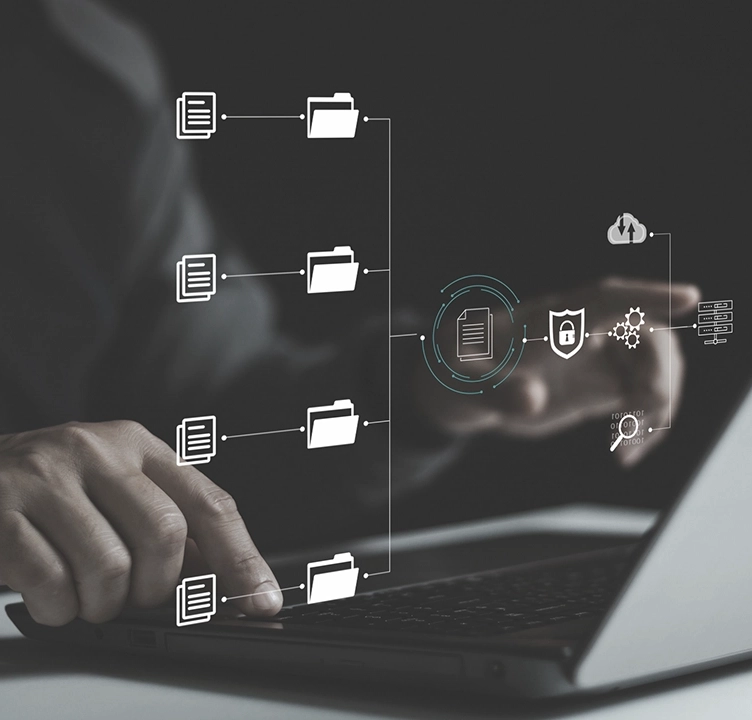
Good data practice is the foundation for intelligent ERP. Many organisations succeed with an approach that keeps ERP as the system of record while a data platform aggregates events for modelling. Applications call models through secure interfaces and the results flow back into ERP screens and workflows. This separation allows each component to evolve without brittle dependencies. It also makes it easier to apply consistent security, privacy and audit controls across the stack.
Frequently Asked Questions About AI in ERP
Is AI replacing ERP?
No. AI is not replacing ERP. AI extends ERP by adding assistive capabilities that help people do their work with less effort and better context. Traditional ERP remains the system of record. AI reads patterns in data, highlights risks and proposes the next action. In most organisations, AI is used to improve the return on the ERP investment rather than to replace it. Adoption can begin with a contained pilot that keeps people in control of significant decisions.
What is the best ERP AI?
There is no single best AI for ERP because every organisation has different processes, data structures and levels of digital maturity. The right choice is the one that aligns with your platform and priority outcomes. Some teams begin with finance focused AI such as cash flow prediction or outlier detection. Others start with demand planning, inventory optimisation or supplier risk.
Does SAP ERP use AI?
Yes. SAP ERP platforms include AI capabilities although specific features depend on your version and modules. Examples include invoice recognition, predictive forecasting, anomaly detection, recommendations and natural language assistance. These capabilities sit within the ERP experience so teams can continue using familiar processes while gaining more automation and insight.
What are the four types of AI systems?
A common way to describe AI is to group it into four categories. Reactive systems make decisions based on the current input. Limited memory systems learn from historical data and can forecast or recommend actions. Theory of mind and self aware AI are future facing concepts rather than technologies used in enterprise software today. In ERP contexts, the practical focus is on reactive and limited memory systems.
How long does it take to implement AI in an ERP system?
Timeframes vary depending on data readiness, chosen use cases and your ERP environment. Most organisations begin with a contained pilot that runs over six to twelve weeks, covering discovery, data preparation, model development, testing and user enablement. Larger programs take longer, but a focused pilot helps establish expectations, uncover dependencies and build confidence before scaling.
Does AI in ERP require replacing our existing system?
No. AI does not require replacing your ERP. Most modern platforms already support AI features or integrations that allow predictive models, automation and natural language tools to be added without redesigning core processes. Many organisations begin by extending their current ERP with specific capabilities that enhance forecasting, automate routine steps or surface insights earlier. This avoids unnecessary system change and helps teams progress at a pace that suits their environment.
Responsible, Secure and Well Governed AI ERP Adoption
Responsible AI is essential in enterprise settings. Clear decision rights, appropriate constraints and consistent monitoring create trust in outcomes. Security and privacy controls must apply across ERP, data platforms and any external services that the models use. People should always be able to review, approve or override significant decisions. With these guardrails in place, leaders can scale adoption with confidence because risks are visible and managed from the start.
What to avoid when adopting the use AI into your existing ERP
Avoid trying to change everything straight away. Focus on a small number of use cases where value is obvious and data is reliable. Avoid custom building when a platform feature or proven accelerator exists. Avoid long design cycles with no delivery. Avoid treating AI as separate from business change. Each recommendation is about reducing risk while keeping value in view. When the basics work well, extension becomes easier and safer.
Recognised by the top ERP Partners in Australia



Leverage Technologies is an SAP Gold Partner, Sage Platinum Partner, and MYOB Acumatica Platinum Partner. Our award-winning team has earned national recognition for excellence in ERP and our commitment to customer success.
Get in touch with us
To learn how a new ERP system can transform your business, contact us and we will be in touch soon to help your business grow together.